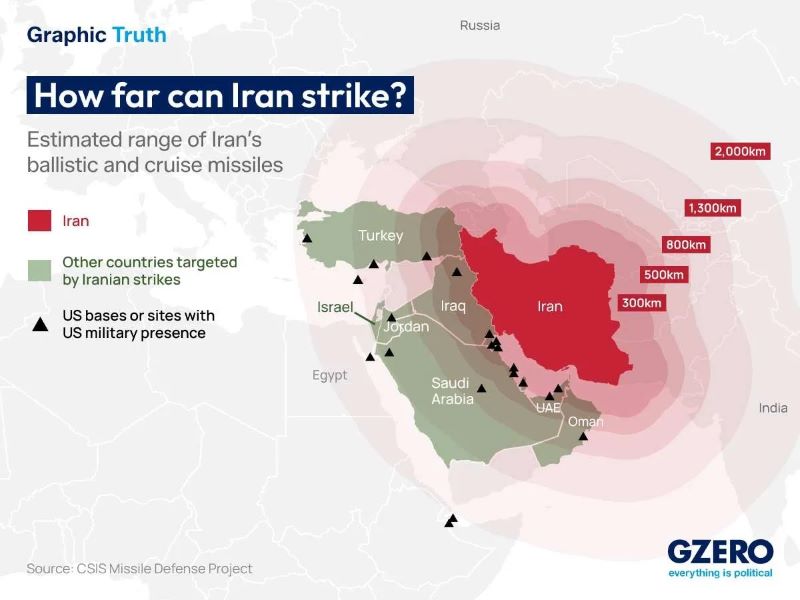
The latest escalation involving the United States, Israel, and Iran has triggered intense speculation about the strategic calculations unfolding behind closed doors in Washington.
Publicly, the United States continues to affirm its long-standing commitment to Israel’s security. The two countries maintain one of the closest military and intelligence relationships in modern history. Israel remains a key strategic partner in the Middle East, receiving extensive military aid, intelligence cooperation, and diplomatic support from Washington.
Yet the complexity of global politics means alliances are rarely static. They evolve as national interests shift, new threats emerge, and domestic political pressures change.
Some analysts have begun examining whether the current conflict could reflect a deeper recalibration of American strategy in the region.
One argument circulating among geopolitical observers is that Washington may seek to rebalance the regional power structure. Israel has long maintained overwhelming military dominance over its neighbors. That dominance has been reinforced by American military technology, intelligence cooperation, and diplomatic backing in international institutions.
However, an excessively concentrated power structure can sometimes complicate broader strategic goals.
For the United States, stability across the wider Middle East remains a critical priority. The region supplies a significant portion of the world’s energy and sits at the crossroads of major trade routes connecting Europe, Asia, and Africa. Washington also maintains security partnerships with several Arab states, including Saudi Arabia, the United Arab Emirates, Egypt, and Jordan.
If tensions involving Israel escalate to the point where regional governments face domestic unrest or instability, American influence across the region could weaken.
Within that context, some analysts argue that Washington might quietly accept a degree of strategic pressure on Israel if it reduces the likelihood of a broader regional confrontation. Such an approach would not represent abandonment of Israel but rather an effort to preserve a broader regional equilibrium.
History offers examples of similar calculations. Major powers have often allowed allies to absorb limited strategic setbacks to stabilize broader geopolitical balances.
Another dimension of the debate involves domestic political dynamics within both countries.
In the United States, foreign policy decisions are influenced not only by national security considerations but also by political relationships, intelligence assessments, and internal power struggles. Leadership changes in Washington frequently reshape the tone and direction of international alliances.
Speculation in media commentary has also raised questions about the complex personal and political relationships between leaders in Washington and Jerusalem. Political alliances are rarely simple. They often involve competing interests, strategic leverage, and sensitive information that can shape negotiations behind the scenes.
While many such claims remain unverified, they reflect the broader reality that international politics frequently involves layers of pressure that extend beyond public diplomacy.
At the same time, any suggestion that Washington would deliberately weaken Israel carries enormous risks.
Israel remains one of the most technologically advanced military powers in the region and a crucial intelligence partner for the United States. A major weakening of Israel could embolden hostile actors and destabilize the broader security architecture that Washington has spent decades constructing.
For that reason, most analysts believe American strategy will ultimately aim to maintain Israel’s security while preventing a conflict that could engulf the entire Middle East.
The confrontation with Iran, therefore, places Washington in a difficult position.
It must support a close ally, deter a regional rival, protect global energy markets, reassure international partners, and avoid a conflict that could spiral into a wider war.
In that environment, every military decision carries strategic consequences far beyond the battlefield.
The coming weeks will reveal whether the current conflict represents a calculated effort to reshape regional power dynamics or simply the latest chapter in the long and dangerous rivalry between Israel and Iran.
What remains certain is that the decisions made in Washington, Jerusalem, and Tehran will shape the Middle East’s geopolitical landscape for years to come.