Guyana Must Turn the MV Barima Disaster into a National Safety Reckoning
After the country’s deadliest maritime disaster, Guyana faces a choice — let institutional failure fade from memory, or use it to rebuild a culture of safety strong enough to match the pace of national development.
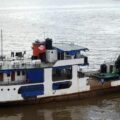
After the MV Barima capsized in the Atlantic off Guyana’s coast, the reckoning is only beginning. As of early August, seventy-six people are confirmed dead, thirty more are missing and presumed dead, and seventy-two survived, out of an estimated 179 passengers and crew who boarded the 87- year-old ferry for a routine crossing from Georgetown to Port Kaituma on July 18. The captain and two other crew members have been charged with murder in connection with the deaths and are due back in court on September 7. A five-member Commission of Inquiry, chaired by Belizean jurist Justice Godfrey Philip Smith, has been sworn in with the power to determine what failed and to recommend prosecutions and maritime reform. Under sustained public pressure — including protests by civil society groups, University of Guyana students and the parliamentary opposition — government has agreed to raise the wreck from the ocean floor to preserve evidence for that inquiry.
To the families who lost loved ones on that voyage, and to a nation grieving alongside them, no words can ease this loss. But the greatest tribute Guyana can pay the dead is to ensure their deaths become the catalyst for real change.
As Guyanese Mourn, We Must Also Learn
This is not simply a maritime story, and it is not only a criminal case now working its way through the courts. It is a story about whether Guyana’s institutions can keep pace with the country’s own growth.
Development Brings New Responsibilities
Guyana is living through one of the most significant periods of economic growth in its history. New roads, bridges, housing, energy projects and business investment are transforming the national responsibilities. As economies grow, so does their complexity — more vehicles, bigger infrastructure, expanding industries, greater public services. All of it demands stronger institutions, better-trained
personnel, tighter supervision and a culture that values safety and accountability as much as speed. When growth outpaces institutional capacity, the gap does not stay hidden for long. It surfaces as accidents, operational failures, project delays and declining public trust. The challenge before Guyana is not simply how to grow, but how to grow safely.
The MV Barima and Our Roadways Tell a Similar Story
The circumstances differ, but the lessons from a sinking ferry and from the continuing toll on our roads rhyme. Too often, public discussion of tragedy stops at immediate cause. National development demands harder questions: Are our systems adequate? Are safety procedures robust and consistently enforced? Are people properly trained? Are risks identified and managed before disaster strikes, and are leaders held accountable for the outcome? These questions apply as much to road safety, workplace safety and emergency response as to maritime transport — and they cannot be answered through blame alone. They require honest evaluation, institutional learning and sustained commitment.
Safety Is a Shared Responsibility
It is tempting to see every failure as government’s alone. Government carries the central role: strong regulation, effective oversight, professional public services and enforcement are indispensable, and the Commission of Inquiry’s mandate to recommend prosecutions and reforms is a welcome step in that direction. But safety does not end with government. It needs businesses and operators that comply with safety standards, investment in training and maintenance, and practise ethical, disciplined leadership. It needs communities that stay vigilant and stridently report unsafe conditions. And it needs citizens who drive responsibly, respect the rules, and accept personal accountability for their own conduct. No law, regulation or ministry can fully compensate for a society that tolerates recklessness, complacency or slackness, as we would say.
The Missing Ingredient Is The Human Side of Development – Entrenched in the Culture
The clearest lesson from nations that have made the leap to developed status is that development is cultural as much as it is infrastructure and economic. Developed societies are not simply wealthier with better roads, bridges and hotels — they are societies that have institutionalised professionalism, discipline, accountability, excellence, respect for standards, and respect for human life through families, schools, workplaces, faith institutions, NGOs, Cooperatives, and public life.
If Guyana is to become a truly developed nation, it must deliberately cultivate a culture of excellence and accountability, beginning in homes and schools and continuing through adult life. Our schools should teach personal responsibility, civic duty, road safety, risk awareness and emergency preparedness as systematically as they teach mathematics, because a nation that teaches safety builds safer communities. How is it that the Oil and Gas companies who employ Guyanese can report excellent safety record while meeting their production goals?
Leadership Is the Real Test – It Is “Where the Buck Stops”
Perhaps the most important lesson of all is that safety is a leadership issue, not merely a regulatory one. Leadership is not the exercise of authority; it is the acceptance of responsibility. Leaders in government, private companies, transportation, schools and communities must understand that their decisions carry consequences for human lives, and must routinely ask what could go wrong and what should be fixed before it does…risk assessment and mitigation measures. The measure of leadership is not only how well one responds to a crisis, but how effectively one prevents it — a standard the MV Barima inquiry will now test against Guyana’s maritime sector, and one every institution in the country should apply to itself.
A National Call to Action
Guyana should measure development not only by GDP growth, construction activity and new investment, but by safety, accountability, institutional effectiveness and public trust. Concretely, the country should:
- Strengthen transportation safety oversight and enforcement;
- Expand civic and safety education in schools;
- Build stronger accountability systems and national safety performance indicators;
- Professionalise operational leadership across public agencies; and
- Ensure the workforce entrusted with public safety is properly trained, motivated and fairly paid.
These reforms will take effort, investment and patience. They will also save lives.
Turning Grief Into National Renewal
The lives lost aboard the MV Barima can never be replaced, and the grief of their families cannot be erased. But Guyana can choose how it responds. We can allow this tragedy to fade, as painful chapters sometimes do, into national memory. Or we can treat it as a turning point — a moment to strengthen our institutions, elevate our standards, and build a culture that values safety and accountability as highly as it values growth. Development is not only about roads, bridges, ports and industries. It is also about building people, institutions, trust and national resilience. If Guyana learns the right lessons, acts with courage, and insists that every sector and leadership accept its share of responsibility, something meaningful can still come from this tragedy: a safer Guyana, a stronger Guyana, and ultimately, a more developed Guyana.
One People, One Nation, One Destiny. One Future. Shared Responsibility and Shared Prosperity.
Cosford A. Roberts, MBA